Why Are There So Many Bots on Tinder? (And What to Do About It)
October 13, 2025 — By Gettit Team · 8 min read
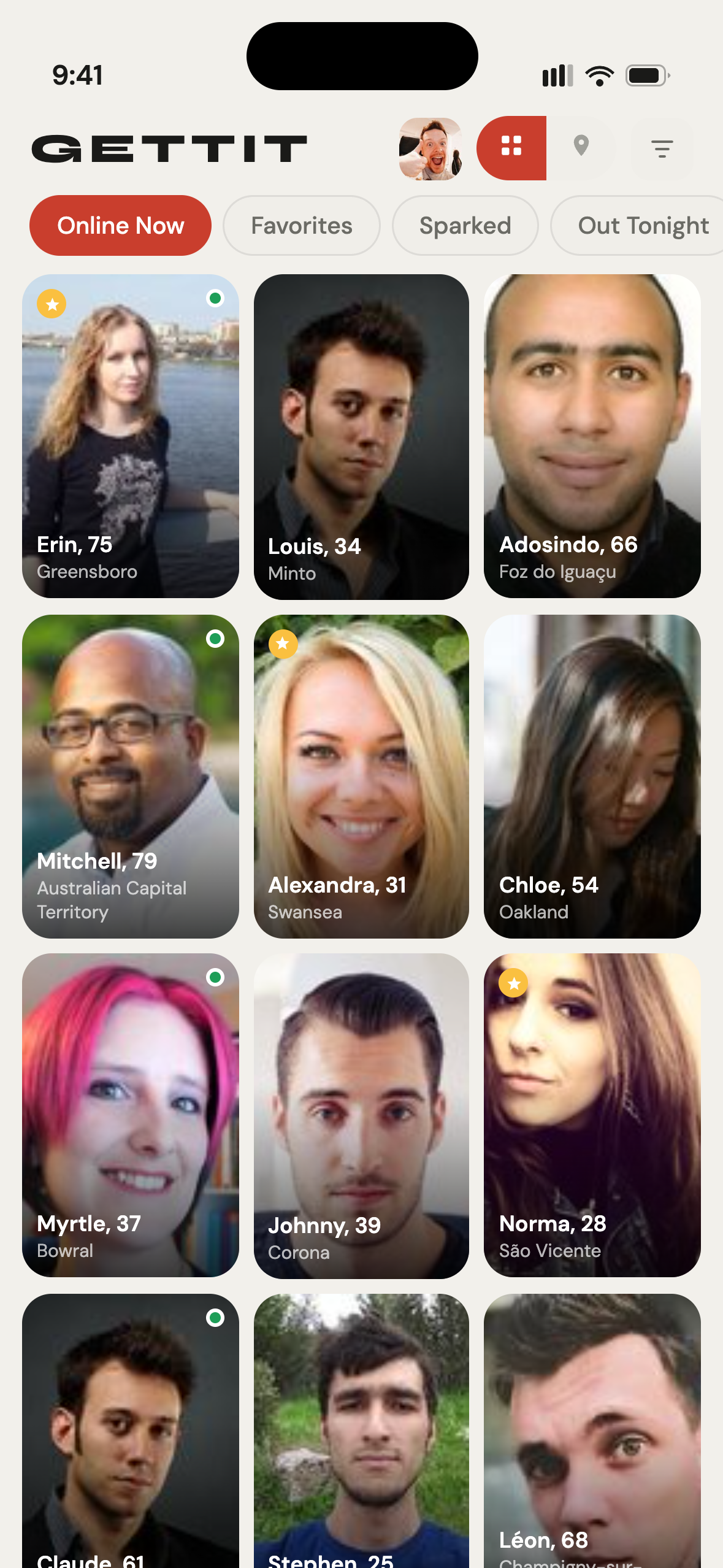
If you’ve spent any real time on Tinder, you already know the pattern: you match with someone who looks almost too attractive, they message you within seconds, and within three exchanges they’re nudging you toward a link or another platform. Bots on Tinder aren’t a minor nuisance — they’ve become a defining feature of the experience, one that erodes trust and drives genuine users away. Understanding why they exist, how they’ve evolved, and what you can actually do about them is the first step toward having a better time online.
Why Bots Thrive on Free-to-Use Swipe Apps
The economics of bot proliferation are straightforward once you see them. Tinder’s free tier — and the free tiers of most major swipe apps — require no friction to create an account. An email address, a phone number, and a handful of images scraped from the internet are all that’s needed. When account creation costs nothing and there’s no meaningful identity check, bad actors can spin up thousands of profiles for pennies.
The financial incentives for bot operators are real. Bots are typically deployed by:
- Affiliate marketers driving users to adult content subscription platforms
- Crypto and investment scammers running so-called “pig butchering” schemes where they build fake emotional connections over weeks before pitching a fraudulent investment
- Data harvesters collecting phone numbers, email addresses, and behavioral data
- Competing app promoters trying to poach users from Tinder to rival platforms
None of these operators care about your experience. They care about conversion rates, and Tinder’s volume — over 75 million monthly active users — makes it an irresistible hunting ground. The more profiles they can create at zero cost, the more shots they get.
The platform’s own incentives complicate the picture. Tinder profits from frustration. Users who are anxious about whether their matches are real keep coming back, keep swiping, and keep buying Boosts. A perfectly curated feed of verified humans might actually reduce engagement.
How Bots Have Evolved from Scripts to Synthetic Personas
Five years ago, a Tinder bot was obvious. A copy-pasted opening line, a generic bio, and a response that had nothing to do with what you just said. Today, the sophistication has increased substantially.
Modern bots use large language models to generate contextually plausible responses. They can maintain conversation threads that feel natural for several exchanges. Some are programmed with backstories — a name, a job, a neighborhood, a detail about a favorite restaurant — all fabricated, but consistent. They reference your messages, match your energy, and wait realistic intervals before responding to avoid detection.
The profile photos have also improved. Early bots used obvious stock photography. Now, AI-generated faces produce images that don’t exist anywhere on the internet, which means reverse image searching — once a reliable defense — no longer catches them. Some bot operations combine AI-generated faces with real-person content from private social media accounts, making the illusion even harder to penetrate.
7 Classic Signs You’re Talking to a Tinder Bot
Even sophisticated bots leave traces. Here’s what to look for:
1. Instant match and immediate message. If you swipe right and receive a match and opening message within seconds, that’s a flag. Humans aren’t watching the screen waiting for your swipe.
2. A bio that fits anyone. Phrases like “love to laugh,” “here for good vibes,” and “ask me anything” are deliberately vague because they have to work for any user who reads them. Real people write specific bios.
3. Model-quality photos with no candid shots. A profile of six photos where every single one looks professionally lit and composed, with zero blurry photos, no group shots, no casual moments — that’s unusual for a real person.
4. Unnatural conversation flow. Responses that don’t quite track what you said, or that pivot topics unexpectedly, often indicate a scripted or AI-generated thread that isn’t truly processing your input.
5. Early push toward an external platform. “I’m barely on here, text me at…” or “Add me on [platform]” in the first few messages is almost always bot or scam behavior. Legitimate users have no reason to leave a platform they just joined.
6. Evasion on specific local questions. Ask about a specific neighborhood, a local landmark, or a recent local event. Bots can’t answer with specificity because they don’t have location-aware scripts detailed enough to respond authentically.
7. Suspiciously consistent response timing. Real humans are inconsistent — they respond quickly sometimes and slowly others. If your “match” responds within 60-90 seconds every single time regardless of the hour, you’re probably not talking to a person.
What Tinder Actually Does About Bots
Tinder’s official position is that it uses automated systems to detect and remove fake accounts. In practice, this plays out as reactive moderation — accounts are removed after users report them, not before they can match and message thousands of people. The platform has no mandatory identity verification. You can create a profile today with a fake name, stolen photos, and a disposable email address, and you’ll be in the swipe stack before anyone notices.
Periodic crackdowns on bot farms generate press coverage, but the underlying economics don’t change. As long as account creation costs nothing and requires no proof of identity, bot operators will continue to adapt and return.
What Verification-First Apps Do Differently
The only approach that actually eliminates bots — rather than chasing them after the fact — is mandatory identity verification at account creation. When every new user must pass an AI-powered selfie check cross-referenced with verified identity, bot accounts simply cannot pass the gate. There’s no profile to create, no swipe stack to enter, no match to send.
This is the approach Gettit takes. Every profile in the proximity grid has cleared identity verification — a live selfie matched against a real ID — before they were ever shown to another user. That’s not a trust badge you can buy or a blue checkmark awarded at the platform’s discretion. It’s a structural requirement. The result is a grid where every face belongs to a real human who exists in the world.
If you want a full breakdown of which dating apps with verified profiles are worth using in 2026, that comparison covers every major platform and what their verification actually means in practice.
The difference in experience is immediate. Conversations feel different when you know the person you’re talking to is real. Engagement is higher, responses are more thoughtful, and the low-grade anxiety of wondering “is this even a person?” simply goes away.
If you’re tired of spending time and emotional energy on accounts that were never human to begin with, the answer isn’t more vigilance on your end — it’s choosing dating apps without bots that solve the problem structurally. Join the Gettit beta and experience what a verified grid actually feels like.
Ready to Meet Real People?
Join the Gettit beta and get 6 months of Plus free.
Sign Up Now — 6 Months Free