Why Dating Apps with Real People Are Replacing Swipe Culture
February 23, 2026 — By Gettit Team · 9 min read
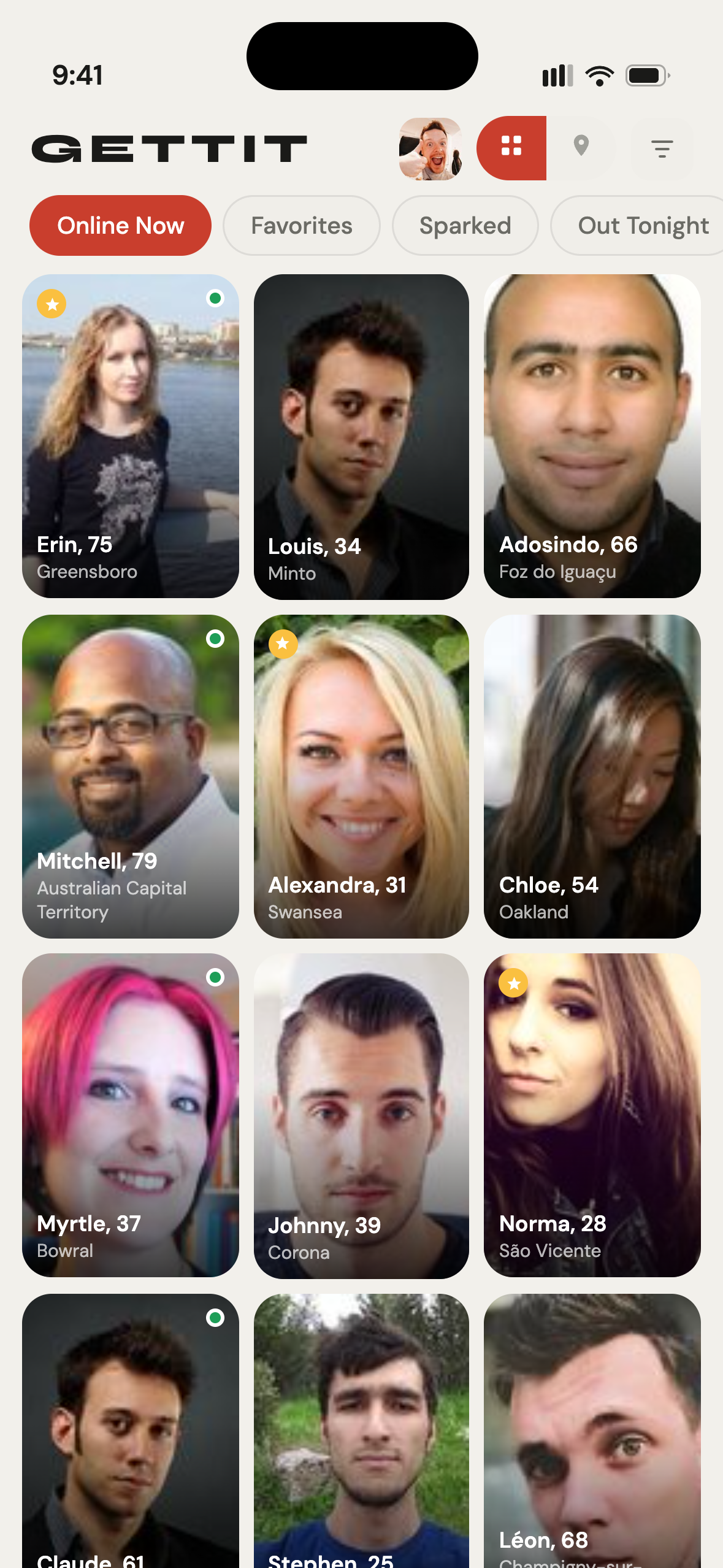
Something has shifted in how people talk about dating apps. A few years ago, the question was which app to use. Now the question is whether to use them at all — and if so, which ones are worth the frustration. User surveys consistently show the same themes: exhaustion with fake profiles, fatigue from infinite swiping that leads nowhere, and a genuine hunger for a dating app with real people that behaves less like a slot machine and more like an actual path to connection. That shift in demand is driving a meaningful change in what the best apps in the next generation are being built to do.
The Four Waves of Dating Apps
To understand where the industry is headed, it helps to understand where it’s been.
The first wave of online dating — Match.com, eHarmony, OkCupid — was built around compatibility algorithms and detailed profiles. These platforms treated online dating as an extension of traditional matchmaking: fill out a thorough profile, let the algorithm suggest compatible partners, write a thoughtful message. The friction was high by modern standards, but the intent was clear. You were expected to be serious.
The second wave was Tinder, which redefined everything. Swipe left or right, frictionless matching, no required profile depth. The gamification of attraction. This wave exploded user growth numbers across the industry. It also created the swipe culture that now defines most people’s negative associations with dating apps: bot-heavy ecosystems, match queues that go nowhere, a dopamine loop optimized for engagement rather than dates.
The third wave was a reaction to swipe fatigue — Hinge, Bumble, and their contemporaries tried to reintroduce intentionality. Hinge’s “designed to be deleted” positioning, Bumble’s requirement that women message first, prompts and voice notes instead of just photos. These platforms made genuine improvements but worked within the same core model: unverified profiles, engagement-first product metrics, algorithmic feeds that kept users inside the app rather than out on dates.
The fourth wave is verification-first. Apps like Gettit are building from a different premise: the problem isn’t the swipe mechanic, it’s the unverified ecosystem. When every profile is a real, identity-verified person, every other product decision works better. The matching is more meaningful. The conversations have more stakes. The dates actually happen.
What Makes an App Feel Like “Real People”
Ask someone what they mean when they say they want a dating app with real people, and a few distinct things emerge.
Mandatory verification is the most obvious. An app where every visible profile has been confirmed against identity verification is structurally different from one where anyone can create a profile with stock photos and a fake name. See our full guide to dating apps with verified profiles for a platform-by-platform breakdown. The difference isn’t just philosophical — it affects every interaction on the platform. When you message someone on Gettit, you know you’re talking to a real human whose name and age have been confirmed. That changes the tone of the conversation before it even begins.
Friction in the matching process sounds counterintuitive — most apps compete on ease of use — but intentional friction creates more deliberate users. When the process of expressing interest requires a bit more thought than a half-second swipe, you’re more invested in the connections you make. The act of choosing someone carefully makes you more likely to follow through. This is why features like profile prompts, Spark expressions, and connection limits tend to produce higher-quality outcomes than pure swipe-based matching.
Features that reward engagement over volume shift the incentive structure in a meaningful way. Gettit’s Response Rate Badge, visible on every profile, is a direct example: it creates a reputation-based incentive to actually reply to messages, and it gives senders useful information about where their effort is likely to be reciprocated. No major swipe-culture app has implemented anything similar, because reply rates draw attention to how many matches never actually communicate.
Proximity-first discovery reflects how real human connection actually works. Showing you people who are geographically close — people you could plausibly meet for a coffee this week — produces a different mental model than an algorithmic feed of faces from across the country. The Gettit proximity grid shows you verified people nearby, sorted by distance. It’s a fundamentally more grounded experience than scrolling through an infinite deck curated by engagement optimization.
The Cultural Moment
The timing of this shift isn’t coincidental. Dating app usage grew dramatically during the pandemic years and peaked sometime around 2022-2023. Since then, multiple platforms have reported declining engagement, and the cultural narrative has shifted. “Slow dating” became a genuine trend. Mainstream media coverage of dating apps tilted heavily negative: the bots, the scams, the superficiality, the psychological toll.
More practically, the high-profile exposure of romance scams — often involving fake profiles on unverified platforms — has raised the stakes of the “are these profiles real?” question beyond social annoyance and into genuine safety concern. The financial and emotional damage from romance fraud is substantial, and a significant driver of it is unverified dating app ecosystems.
This context is accelerating user appetite for platforms that treat “real people” as a non-negotiable baseline rather than a premium differentiator. Users are increasingly willing to pay for a platform that guarantees what was once assumed — that the people on the app are actually who they say they are.
What “Real People” Specifically Solves
The practical benefits of a real-people-first approach cascade outward from the core guarantee.
When every profile is verified, bots are structurally impossible. An automated account cannot pass live-selfie verification. The fraud vectors that produce romance scams and fake profile ecosystems on major apps simply don’t exist in a mandatory-verification environment. That’s what separates dating apps without bots from the rest of the field.
When users know their real identity is attached to their account, ghosting decreases meaningfully. The social accountability that’s absent when you’re an anonymous username becomes present when your real name and verified age are part of your profile. People behave better when the stakes feel real. This is the core promise of an anti-ghosting dating app built on verified identity.
When response rates are visible and proximity is the primary sorting mechanism, the path to an actual date is shorter. You can see who’s nearby, you can see who’s likely to respond, and you’re talking to someone whose identity you don’t have to wonder about. The friction between “matched” and “met in person” collapses.
What to Look For in a Real-People Dating App
If you’re evaluating whether a platform genuinely qualifies as a “real people” app, a few questions cut through the marketing:
Is verification mandatory (applied to all profiles) or optional (a badge some users choose to pursue)? Optional verification creates a two-tier system that still allows the majority of profiles to be unverified.
Does verification confirm identity (name, age, face against a verified identity) or only photo match (selfie matches uploaded photos)? Photo-match verification eliminates stolen-photo catfishing but leaves name and age misrepresentation completely open.
Are there accountability features that create natural consequences for low-quality behavior — or does the platform design incentivize exactly the ghosting and disengagement that makes swipe culture feel hollow?
Is the discovery model built around people you could realistically meet — by geography, by mutual availability signals — or is it an algorithmic feed designed primarily to maximize time in the app?
Gettit’s beta launch in April 2026 is built on all four of these principles. It’s a smaller user pool than legacy platforms for now — the tradeoff of being in a first-wave city rollout rather than a decade-old ecosystem — but the quality of the experience reflects what happens when a platform is designed from the ground up for real connection rather than engagement optimization. Sign up for the beta if you’re in New York and ready to experience the difference.
Ready to Meet Real People?
Join the Gettit beta and get 6 months of Plus free.
Sign Up Now — 6 Months Free