Why Identity Verification Is the Future of Online Dating Safety
January 26, 2026 — By Gettit Team · 9 min read
What would online dating look like if every user had to prove they were a real person before their profile went live? Not send an email and click a link — actually prove it. Submit identity verification, pass a live selfie check, and only then get access to other people’s profiles. The identity verification dating app question sounds simple, but it gets at something fundamental about why dating apps feel the way they do — and why the experience on verified platforms is categorically different from the baseline.
The History of Verification on Dating Apps
Dating app verification has evolved through several generations, each one incrementally harder to fake — but most platforms stopped well short of the finish line.
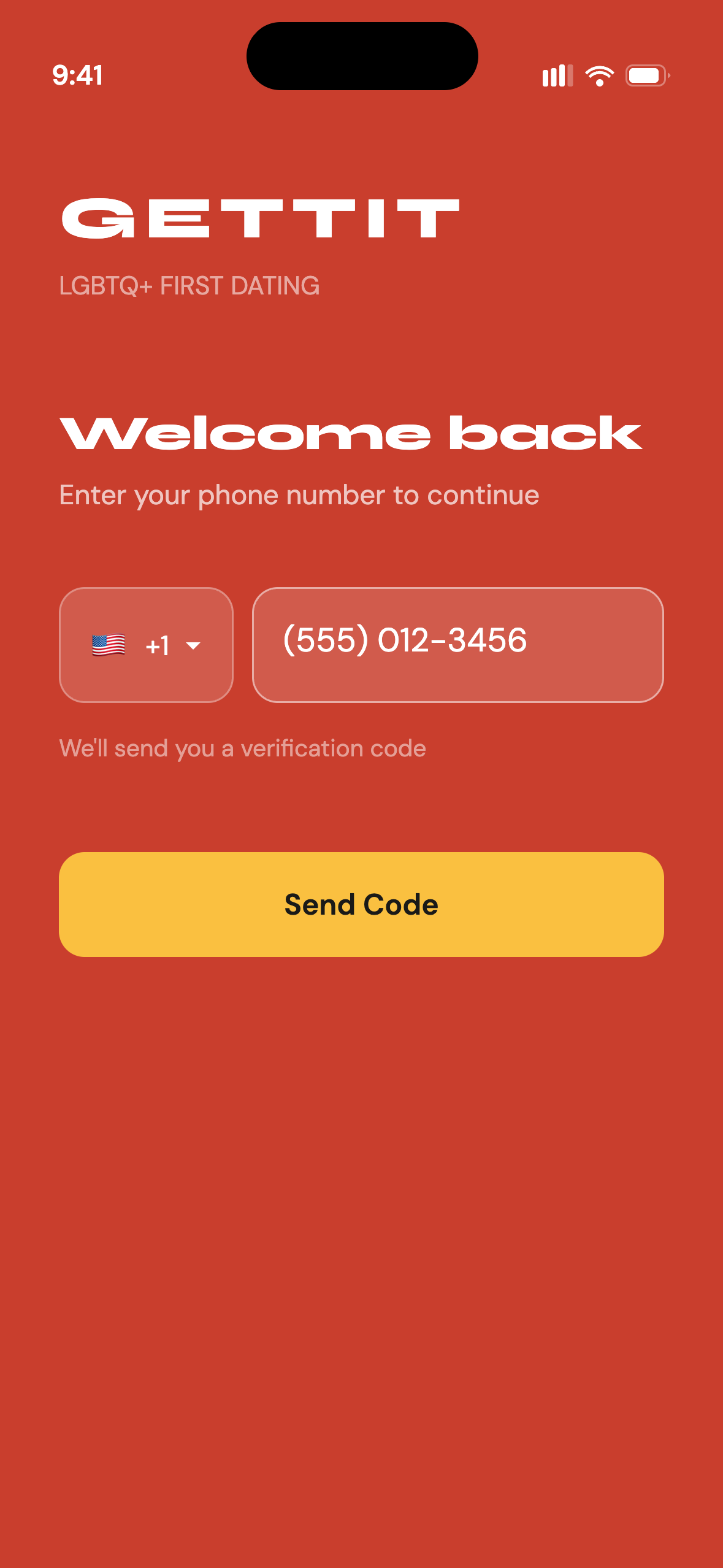
Phone number verification was the first step, and it’s still what most apps call “verification.” You enter a phone number, receive a text message, and enter the code. The problem is that phone numbers are trivially available through prepaid SIM cards, VoIP services, and number-spoofing tools. A bot farm that operates at scale can acquire thousands of phone numbers at minimal cost. Phone verification proves that someone controls a phone number — not that they’re a real person, and not that they’re who they claim to be.
Email verification is weaker still. Creating a new email address takes approximately 90 seconds and can be done with no personal information whatsoever. Most apps have moved away from treating email verification as meaningful at all.
“Selfie verification” or photo match came next, and it’s what many apps currently market as their verification feature. The user submits a photo or short video in a specific pose. Computer vision compares the submitted media to their profile photos and confirms that the same face appears in both. This is more meaningful than phone or email verification — it confirms that the person operating the account has physical access to the face in the photos. It does not confirm who that person actually is. You could pass selfie verification using photos of a friend who consented to you using their image, or using a photo of any real person you have access to.
Full identity verification is the standard that has eluded most of the industry: live selfie verification that confirms the ID photo matches the person submitting it right now. This establishes actual identity — not just that a face is consistent, but that the face belongs to a specific person whose real name and identity are on file with the platform.
Why Most Apps Haven’t Made Verification Mandatory
The business case against mandatory identity verification is straightforward: it reduces sign-ups.
Dating apps have historically competed on user volume. More profiles means a better experience for each user, which means more subscriptions, which means more revenue. Anything that adds friction to the onboarding process — and verification adds meaningful friction — reduces the number of people who complete signup. A typical e-commerce funnel might lose 10–15% of users at each additional step. Identity verification adds multiple steps.
The other factor is cost. Running a identity verification check at scale requires either expensive third-party services or significant investment in proprietary infrastructure. On a free-tier-supported platform where many users never pay anything, the economics are difficult.
The result is that the industry defaulted to optional verification with badge incentives. Show users a verified badge on some profiles, let the unverified accounts stay in the pool, and let users sort out the difference themselves. The problem is that optional verification doesn’t change the baseline character of the platform — it just creates a two-tier experience where the verified users are a minority.
What Mandatory Verification Actually Prevents
The difference between optional and mandatory verification is a difference in kind, not degree.
Bots cannot pass identity verification at scale. Bot farms work because creating fake accounts is cheap and easy. When every account requires real identity verification matched to a live selfie, the economics collapse. There’s no way to run thousands of bot accounts through a mandatory ID check — each one would require a real person’s identity documents. For a ranking of which platforms have actually solved this, see the guide to best dating apps without bots.
Catfishing becomes dramatically harder. Catfishing depends on using someone else’s photos to impersonate them. A live selfie check against identity verification breaks this — the person operating the account has to be the person in the ID photo. There are edge cases (identity theft, compromised credentials), but they’re rare compared to the casual catfishing that’s endemic on unverified platforms.
Serial harassers can’t simply create a new account after being banned. Without verification, a banned user makes a new email address and is back in ten minutes. With mandatory verification, account creation requires real credentials, which means bans have real teeth.
Predatory behavior carries real accountability. When a user knows that their real identity is on file with the platform, the calculation around bad behavior changes. Threats, harassment, and manipulation are all harder to sustain when they’re provably traceable to a real person.
None of this makes a verified platform perfectly safe — human behavior is complex, and verification doesn’t filter for values or intentions. But it dramatically narrows the pool of bad actors who can operate in the first place.
The Friction Objection
The objection to mandatory verification that comes up most often from users is friction. Identity verification takes a few minutes. Uploading an ID is a privacy concern for some people. The onboarding process is longer and feels more like applying for something than joining a social platform.
This friction objection deserves a real answer rather than dismissal.
The privacy concern about submitting an ID to a dating app is legitimate. It depends entirely on how that data is handled: whether the underlying document is retained after the verification check passes, how it’s stored, who has access to it, and what happens to it when you close your account. These are questions to ask specifically about any app that requires ID verification.
The time friction is real but contextually small. The verification process takes three to five minutes at initial signup — a one-time cost for an account that exists indefinitely. Against the hours most users spend on dating apps, the math is easy.
The deeper response to the friction objection is that the slight inconvenience of verification is worth it because of what you get in return: a platform where every profile you see belongs to a real person whose identity is established. That’s worth three minutes.
Where Verification Is Headed
The regulatory environment around dating app safety is tightening. Several jurisdictions have introduced or are considering legislation requiring dating platforms to implement identity verification, particularly to protect minors and vulnerable users. The direction of travel is clear even if the specific requirements vary.
Technological improvements are also reducing friction over time. Digital ID systems in several countries allow users to prove identity without sharing the underlying document. Biometric verification continues to improve in accuracy and speed. The cost of running ID checks at scale is declining as the infrastructure matures.
The platforms that have already built mandatory verification into their core infrastructure are ahead of this curve rather than scrambling to add it later. Building verification as a bolt-on to an existing platform is architecturally messier and often produces a worse user experience than designing around it from the start.
Gettit’s Position
Gettit made mandatory identity verification a non-negotiable design choice, not a premium feature. Every user — at both Gettit Base ($0.99/month) and Gettit Plus ($9.99/month) — passes the same identity check before their profile is visible to anyone. There is no unverified tier and no way to skip the process. For a complete look at where every major app sits on the verification spectrum, see the full breakdown of dating apps with verified profiles.
The decision was deliberate: the goal is a platform where trust is the baseline, not an upgrade. When every profile in the proximity grid belongs to a verified person, the entire character of the experience changes — fewer defensive filters needed, more willingness to actually engage, more confidence that a match is worth pursuing.
That’s what identity verification does at the system level. It’s not just a safety feature. It’s the foundation that makes everything else on the platform more valuable.
Join the Gettit beta — open now in New York City, with Gettit Plus free for six months for early users.
Ready to Meet Real People?
Join the Gettit beta and get 6 months of Plus free.
Sign Up Now — 6 Months Free