What Does 'Verified' Actually Mean on Dating Apps? (Tinder vs. Hinge vs. Gettit)
February 16, 2026 — By Gettit Team · 8 min read
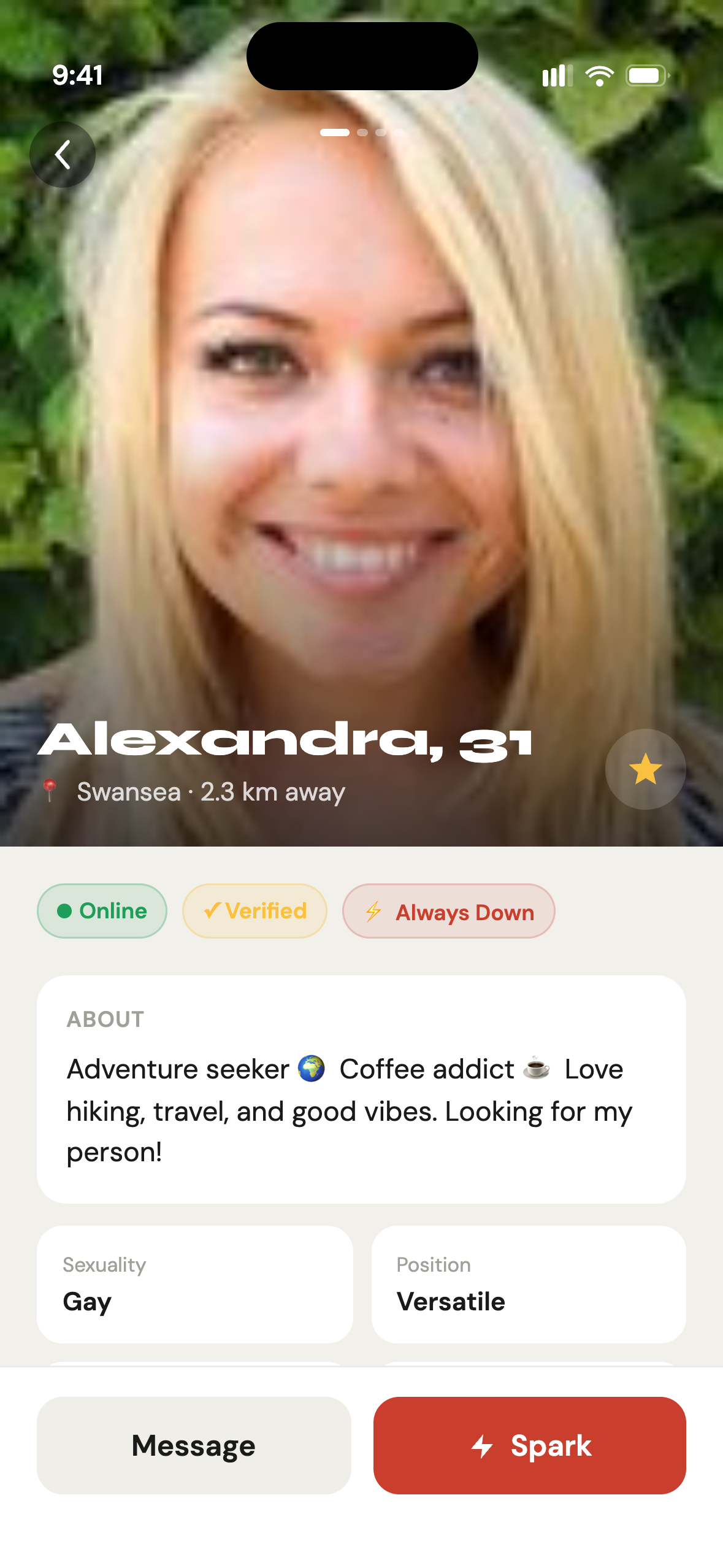
The little blue checkmark on a dating profile looks reassuring. It implies that someone checked — that the person behind the profile is who they say they are. But “verified” on a dating app is one of the most misleading words in consumer software, and the gap between what users assume it means and what it actually means on most platforms is wide enough to walk a catfish through. Understanding what a verified dating app genuinely guarantees — and what it doesn’t — is one of the most practically useful things you can know before investing your time and emotional energy in an app.
What “Verified” Usually Means: Face Match Only
On the majority of major dating apps, verification works like this: you submit a selfie, the app compares it against your profile photos using automated image matching, and if your face matches the photos you’ve uploaded, you receive a badge. That’s it.
That process answers exactly one question: is the face in your profile photos your actual face? It does not verify your name. It does not verify your age. It does not verify anything about your identity beyond the fact that your selfie and your profile photo contain the same face.
This is genuinely useful — it eliminates one category of deception. If someone stole photos of a model and uploaded them as their own, they can’t pass a selfie check. That’s worth something. But it leaves a significant gap that most users don’t realize exists — and it does nothing to address the bots and fake accounts that plague dating apps without bots as a design goal.
Platform-by-Platform Breakdown
Tinder offers an optional photo verification feature where users take a real-time selfie in a specific pose. The system checks whether the selfie matches the profile photos. Verification is entirely optional — the majority of Tinder profiles are unverified. A verified Tinder profile tells you the person’s face matches their photos. It tells you nothing about their name, age, or identity.
Hinge does not have a dedicated verification program. At the time of writing, Hinge relies primarily on Facebook or phone number sign-in as a loose proxy for account legitimacy, plus internal moderation. There is no badge or public-facing signal that a given profile has been verified in any meaningful sense.
Bumble offers optional photo verification via a selfie matching process, similar to Tinder’s approach. Bumble has also experimented with video verification features. Like Tinder, a Bumble verification badge confirms face-to-photo match — not identity. Verification is optional and a significant portion of active profiles don’t carry the badge.
Gettit requires identity verification at account creation before a profile becomes visible to other users. The process involves completing a live selfie verification check. An automated system cross-references the face on the ID document with the live selfie and extracts name and age from the document. This verifies three things simultaneously: that the person’s face is genuine, that their stated name is accurate, and that their stated age matches official records.
The “Face Match ≠ Identity” Gap
The gap between photo verification and identity verification is the difference between knowing someone’s face is real and knowing who that person actually is.
Consider the practical scenario: a person creates a dating profile using their own face but a fake name — perhaps “Alex” instead of their real name — and shaves four years off their age. They pass a selfie verification check without any difficulty. From the app’s perspective, they’re verified. From your perspective, you’ve been given a false sense of security about exactly the information you’d most want to confirm.
This isn’t a theoretical edge case. Age misrepresentation is one of the most common forms of profile deception on dating apps, according to user surveys across multiple platforms. Name misrepresentation is harder to measure but consistently reported. Both are completely invisible to photo-only verification systems.
Full identity verification closes this gap. When the verification process requires identity verification, a user cannot misrepresent their name or age without submitting fraudulent documents — a substantially higher bar that eliminates the casual deception that photo-match systems leave entirely open.
A Quick Comparison
| App | Verification Type | Optional or Required | Verifies Face | Verifies Name | Verifies Age |
|---|---|---|---|---|---|
| Tinder | Selfie photo match | Optional | Yes | No | No |
| Hinge | None | N/A | No | No | No |
| Bumble | Selfie photo match | Optional | Yes | No | No |
| Gettit | Live selfie verification | Required | Yes | Yes | Yes |
Why Mandatory Verification Changes the Ecosystem
There’s an important distinction between optional and mandatory verification. When verification is optional, it creates a two-tier ecosystem: verified profiles (who chose to verify) and unverified profiles (who didn’t). The decision not to verify carries no information — many legitimate users simply don’t bother. The result is that the verification badge loses much of its signal value.
When verification is mandatory, as on Gettit, every visible profile has passed the same check. There are no unverified profiles in the active user pool. The verification badge isn’t a signal that distinguishes one type of user from another — it’s a baseline guarantee that applies to everyone. That’s a fundamentally different guarantee.
It also changes behavior. When users know their real identity is attached to their account — not just their face, but their actual name and age — they tend to engage more thoughtfully. The social stakes feel real because they are real. The dynamic shifts from anonymous browsing toward something closer to a real-world introduction.
What “Verified” Should Mean in 2026
The standard for verification has been moving in one direction for several years. Users are increasingly aware that photo-match verification is insufficient, and high-profile cases of catfishing, age misrepresentation, and fake profiles on major platforms have accelerated that awareness. The industry is slowly converging on a higher standard.
In 2026, a verified dating profile should mean identity-verified: a real person, confirmed name, confirmed age, confirmed face. Anything less is better than nothing — a selfie check still eliminates stolen-photo catfishing — but it falls short of the guarantee that word implies to most users.
When you see a verification badge, it’s worth asking which kind you’re looking at. The difference matters more than most apps would prefer you to notice. Gettit’s mandatory identity verification means that every profile you see has cleared that higher bar — not as a premium feature, but as the entry requirement for being on the platform at all. For a deeper look at why this matters, see our guide to identity verification and the future of online dating.
Ready to Meet Real People?
Join the Gettit beta and get 6 months of Plus free.
Sign Up Now — 6 Months Free