I Used Gettit for 30 Days. Here's What Happened.
March 9, 2026 — By Gettit Team · 10 min read
I should tell you upfront that I came into this Gettit dating app review as a skeptic. I’ve been on Tinder and Hinge for the better part of three years, and somewhere in the second year I stopped expecting dating apps to actually work and started treating them as a background activity — something I half-engaged with while watching TV, the kind of thing you do out of habit rather than hope. When I heard about Gettit and its beta launch in New York, I signed up mostly out of professional curiosity. Thirty days later, I have more to say than I expected.
Week One: Setup and First Impressions
The first thing that’s different about Gettit is the signup process. Before your profile is visible to anyone, you verify your identity: live selfie verification. The whole thing took me about five minutes — closer to seven because I was doing it on a crowded subway platform and the lighting was bad. There’s a brief wait while the system processes, and then you’re in.
My initial reaction was mild irritation at the friction. Tinder takes about ninety seconds to set up. Gettit takes five to seven minutes and requires you to have your ID handy. I grumbled internally and then immediately recognized that the grumbling was irrational — of course the extra two minutes is worth it if it means every person I interact with has cleared the same bar. The annoyance dissolved pretty quickly.
The profile setup itself is more involved than Tinder and roughly comparable to Hinge. You add photos (the Base plan allows up to five), answer a few prompts, set distance and age preferences. The distance settings are notably granular — you can set a tight radius if you want to see only people within a short distance, which I appreciated as someone who lives in Brooklyn and has approximately zero interest in matching with someone in New Jersey.
The main interface is a proximity grid rather than a swipe deck. I stared at it for a few minutes trying to recalibrate. After three years of swiping, the grid format felt almost disorienting — like being handed a menu at a restaurant when you’re used to a conveyor belt. Each profile card shows the person’s verification badge, their first name, age, distance, and a Response Rate Badge indicating their historical reply likelihood. That last element stopped me cold the first time I noticed it.
I’d never seen a dating app show me, at a glance, how likely someone was to actually respond to my message before I sent it. I’ll come back to this.
Week Two: First Conversations
By week two I had started messaging people in earnest. The Response Rate Badge turned out to change my behavior in a way I hadn’t anticipated — I found myself gravitating toward profiles with higher reply rates, not because I was ranking people by a number, but because the information felt like basic efficiency. Why send a thoughtful message to someone with a 14% response rate when the person three spots over has 79%? It’s not that the 14% person is less interesting. It’s that my limited time and emotional energy was better spent where there was a higher probability of an actual conversation.
This sounds clinical, but in practice it felt like a small kindness the app was extending to me — information I’d always wanted and never had. On Tinder, I’d spent years sending messages into voids without knowing whether the other person had opened the app in three months. The Response Rate Badge made the whole thing feel more honest.
The quality of conversations was different in a way that’s harder to quantify but genuinely noticeable. Knowing that I was talking to a verified person — real name, verified age, confirmed face — changed the tone of the interaction for me even before anything was said. I was more relaxed. The background hum of “is this person who they say they are” that I’d carried through every Tinder conversation without consciously naming it was simply gone.
I had about twelve conversations that went beyond a few exchanges in week two. Roughly four of them felt like real back-and-forth with a person I was genuinely curious about. On Tinder, in my recent experience, getting four real conversations out of twelve would have felt exceptional.
Week Three: First Dates
I set up two dates in week three. This was the first time I’d managed to get from app to actual plans in under two weeks on any platform in recent memory. I’m attributing that partly to the verification effect — the barrier of “do I actually know enough about this person to meet in person” was meaningfully lower when I already knew their identity had been confirmed — and partly to the smaller, more focused nature of the user pool.
The first date was genuinely good. We met for coffee, talked for two hours, and made plans to meet again. I noticed that she seemed equally at ease in a way that I’ve sometimes found absent on first dates from other apps, where the other person’s body language says “I’m still assessing whether you’re who your photos suggest.” There was less of that on both sides.
The second date was fine. Pleasant conversation, no real spark, both of us were polite about it. Nothing special, but nothing painful either. That’s probably the median outcome of a second date regardless of which app generates it.
Week Four: Longer-Term Assessment
By week four I had a clear picture of both what Gettit does well and where its current limitations are.
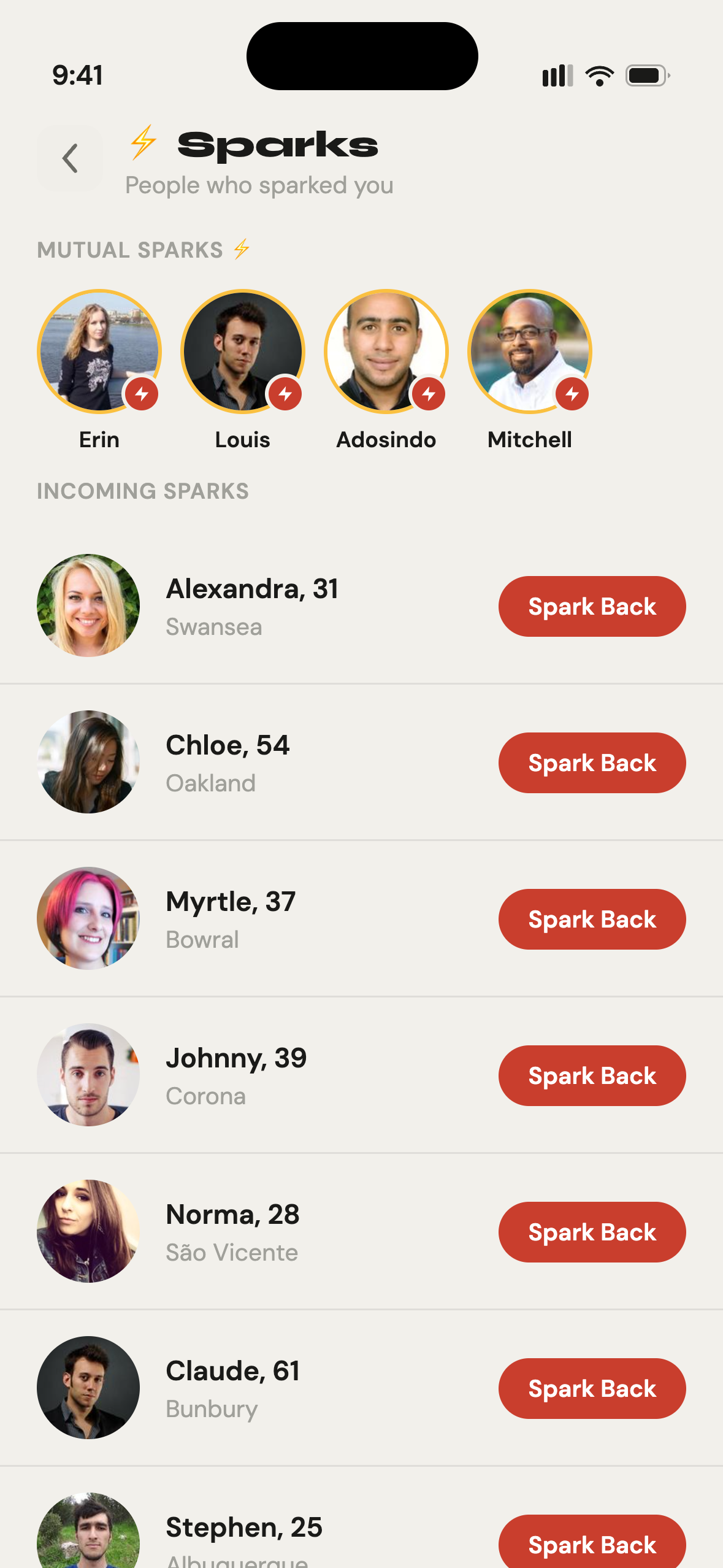
What’s working: the ghost rate is genuinely lower than anything I’ve experienced on Tinder or Hinge — which is exactly what you’d expect from a purpose-built anti-ghosting dating app. Of the twelve meaningful conversations I mentioned above, ten of them either concluded naturally or continued actively — only two went completely silent mid-conversation in a way that felt like a ghost rather than a natural ending. That’s not a scientific measurement, but as an experiential data point it’s striking. I also found the Sparks feature — the mutual interest signal system — useful in the way it surfaces people who’ve already shown interest before you’ve messaged them, which collapses one of the more anxiety-producing unknowns in the early stages of connecting with someone.
What’s not working as well: the user pool is smaller than Tinder’s by a significant margin. Gettit launched in beta in New York in April 2026, and the scale is early-stage. On any given day I might see fifteen to twenty-five profiles within my set distance, versus the essentially infinite scroll of a major app. If you’re in a less dense part of Brooklyn or outside Manhattan, some days are thin. If geographic variety or sheer volume of options is important to you, that’s a real limitation right now.
There’s also no Incognito Mode on the Base plan — that’s a Gettit Plus feature. I spent a few days being visible to everyone within range without a way to browse more privately, which didn’t end up mattering but is worth noting if stealth browsing matters to you.
Overall Verdict
Thirty days in, I renewed my Gettit Base subscription ($0.99/month) without hesitation. The platform delivers on its core promise: every person you’re talking to is real, verified, and geographically close. The conversations are higher quality than what I’d gotten used to, the ghost rate is lower, and the two dates I went on in a single month outperformed my Tinder-to-date ratio from the previous quarter.
The tradeoff is scale. Gettit is in beta, in one city, with an early-adopter user base. It is not the right app if you want to swipe through hundreds of profiles a day. It is potentially the right app if you’re exhausted by doing exactly that and ending up nowhere.
I went in skeptical. I came out a convert — with the honest caveat that scale will determine whether the platform can maintain its culture as it grows. That’s the genuine uncertainty. For now, in April 2026 New York, it’s working. Sign Up Now if you’re curious enough to find out for yourself. And if you’re coming from Tinder, this story will resonate.
Ready to Meet Real People?
Join the Gettit beta and get 6 months of Plus free.
Sign Up Now — 6 Months Free