Why I Deleted Tinder and Switched to a Verified Dating App
March 16, 2026 — By Gettit Team · 9 min read
The moment I decided to delete Tinder and switch to a verified dating app was embarrassingly specific. I was sitting on my couch on a Wednesday night, bored enough to actually scroll through my match queue and count. Forty-seven matches. On paper, that sounds like abundance — like I should be drowning in options. Instead, I spent twenty minutes going through the list and came away with a picture that was impossible to be optimistic about.
Roughly a third of those forty-seven matches showed obvious signs of bot behavior: profiles with generic, slightly-off bios, photos that looked like they’d been sourced from image libraries, opening messages that arrived the moment I matched, structured as variations on the same script. A few had already tried to redirect me to external links or payment platforms. Delete, delete, delete.
Another third hadn’t messaged or responded to anything in six months or more. Not inactive in an “I’ve been busy” way — inactive in a “this account is a ghost” way. The profile was technically live, the match existed, but there was no person on the other end in any meaningful sense. Zombie accounts: still present, completely inert.
That left maybe fifteen matches I could reasonably characterize as involving real, active humans. Of those fifteen, exactly two had produced conversations that felt like real exchanges between two people. Two out of forty-seven. And I had paid for Tinder Gold to access this experience.
I deleted the app that night. And then I started thinking seriously about what I actually wanted from a delete Tinder alternative.
Why I’d Kept Tinder So Long
Looking back, it’s obvious that I should have made this decision much earlier. The app had been producing diminishing returns for at least a year before I left. So why did I stay?
The honest answer is inertia plus FOMO. Tinder is where everyone is — that’s the social assumption, anyway. Leaving felt like opting out of something that everyone else was still participating in. What if the right person was on there and I’d just been unlucky with my timing? The sunk cost of three years and multiple paid subscriptions made it feel meaningful to stay. It wasn’t.
The specific events that eroded my tolerance, in roughly chronological order: paying for Gold and noticing no real improvement in conversation quality. A match that I’d been excited about turning out to be a catfish — her face was real, the selfie had passed verification, but her name and age were fabricated, which I only discovered when she mentioned details that didn’t add up and I gently pushed. The escalating frequency of obvious bot matches that the platform’s verification system was doing nothing to screen out. And finally, the count.
Forty-seven matches. Two real conversations. The math of that ratio should have broken through my inertia sooner. It didn’t. But it did eventually.
What I Was Looking For in an Alternative
I had one non-negotiable requirement: real, identity-verified users. Not photo verification — I’d seen clearly what photo-only verification failed to prevent on Tinder. I wanted a platform where the name on the profile was a real name, the age was a verified age, and the face had been cross-checked with your real identity. I started researching dating apps with verified profiles and the differences were stark. Everything else was negotiable.
Secondary wish list: proximity-first matching (I wanted to meet people I could actually have coffee with, not matches who lived four hours away), accountability features that might reduce ghosting, and an aesthetic that felt like it was designed for adults rather than optimized for the psychological vulnerabilities of a nineteen-year-old.
I did the research. Most “alternatives to Tinder” either have the same verification problems or swing in the opposite direction and feel like niche platforms with tiny user pools. Gettit was the app that kept coming up in conversations about verification-first dating. It was launching in beta in New York in April 2026. I signed up.
What Changed When I Switched
The onboarding is longer than Tinder. You complete a live selfie verification, and there’s a brief processing wait before your profile goes live. The first time I did it I had a reflexive complaint about the friction, followed immediately by the realization that this was exactly the friction I’d been wishing for on behalf of every other user on the platform.
The grid-based interface took some adjustment. After years of swipe mechanics, being presented with a spatial layout of nearby profiles felt genuinely different — less like a game, more like a map of people who exist in the same physical world as me. Every profile carries a verification badge and a Response Rate Badge showing their historical reply likelihood. Both pieces of information changed how I browsed before I consciously registered that they were changing it.
The verification badge effect is subtle but real. I found myself engaging with profiles with more confidence, investing in crafting a thoughtful first message without the background anxiety of “is this a bot or a zombie account?” That anxiety had been a constant on Tinder, so normalized that I’d stopped noticing it until it was gone.
The Response Rate Badge was immediately useful. I stopped spending energy on messages to people with low reply rates and directed it toward people who had demonstrated, by their actual behavior, that they engaged with the platform. The shift felt rational in a way that dating apps rarely feel.
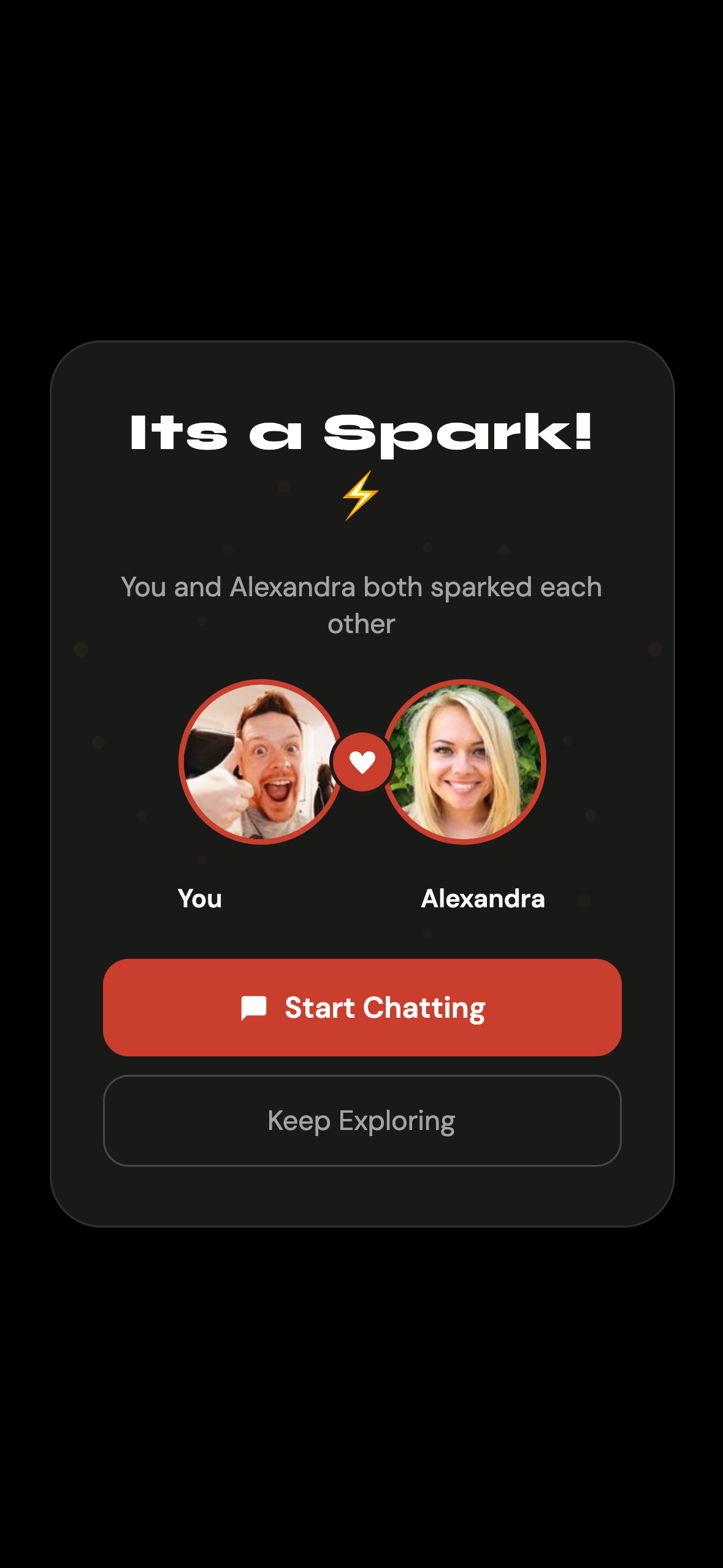
The first actual conversation I had on Gettit lasted four days and ended with a date. One conversation. Four days. A date. That outcome had become so uncommon on Tinder that it registered as surprising. It shouldn’t be surprising. It should be the baseline.
I’ll be honest about the limitation: the user pool is smaller. Gettit is in beta with a city-first rollout, and some days the grid is thin. If you’re someone who wants the sensation of infinite options, this is not your platform. If you’re someone who’s been through the forty-seven-match-two-conversations experience and found it hollow, the tradeoff of fewer but realer profiles is not a tradeoff at all. It’s a straightforward upgrade.
What I Know Now That I Didn’t Know Then
Three years on Tinder taught me things, though not the lessons I was hoping to learn when I started.
I learned that a “verified” badge means almost nothing if the verification only checks that your selfie matches your uploaded photos. I learned that a large match count is a vanity metric with no relationship to actual connection. I learned that paying for premium features on a platform designed to keep you anxious and single is a way of funding your own dissatisfaction.
The alternative I was looking for — an anti-ghosting dating app with verified real people, accountability features, and a matching model built around proximity to people I might actually meet — exists. It launched in beta in April 2026 and it has a smaller user base than Tinder and it is, by every meaningful measure, better.
Deleting Tinder was overdue by about eighteen months. Switching to a verified dating app is the best decision I’ve made in my dating life in recent memory — with the genuine caveat that I am writing this in the app’s early days, when the community is small and the outcomes are not yet proven at scale. The potential is visible. Whether it delivers at scale is still being written. For a deeper comparison of the two platforms, see Gettit vs. Tinder.
Join the Gettit beta if you’re in New York and ready to find out.
Ready to Meet Real People?
Join the Gettit beta and get 6 months of Plus free.
Sign Up Now — 6 Months Free