Why People Ghost on Dating Apps — And How to Avoid It
October 27, 2025 — By Gettit Team · 9 min read
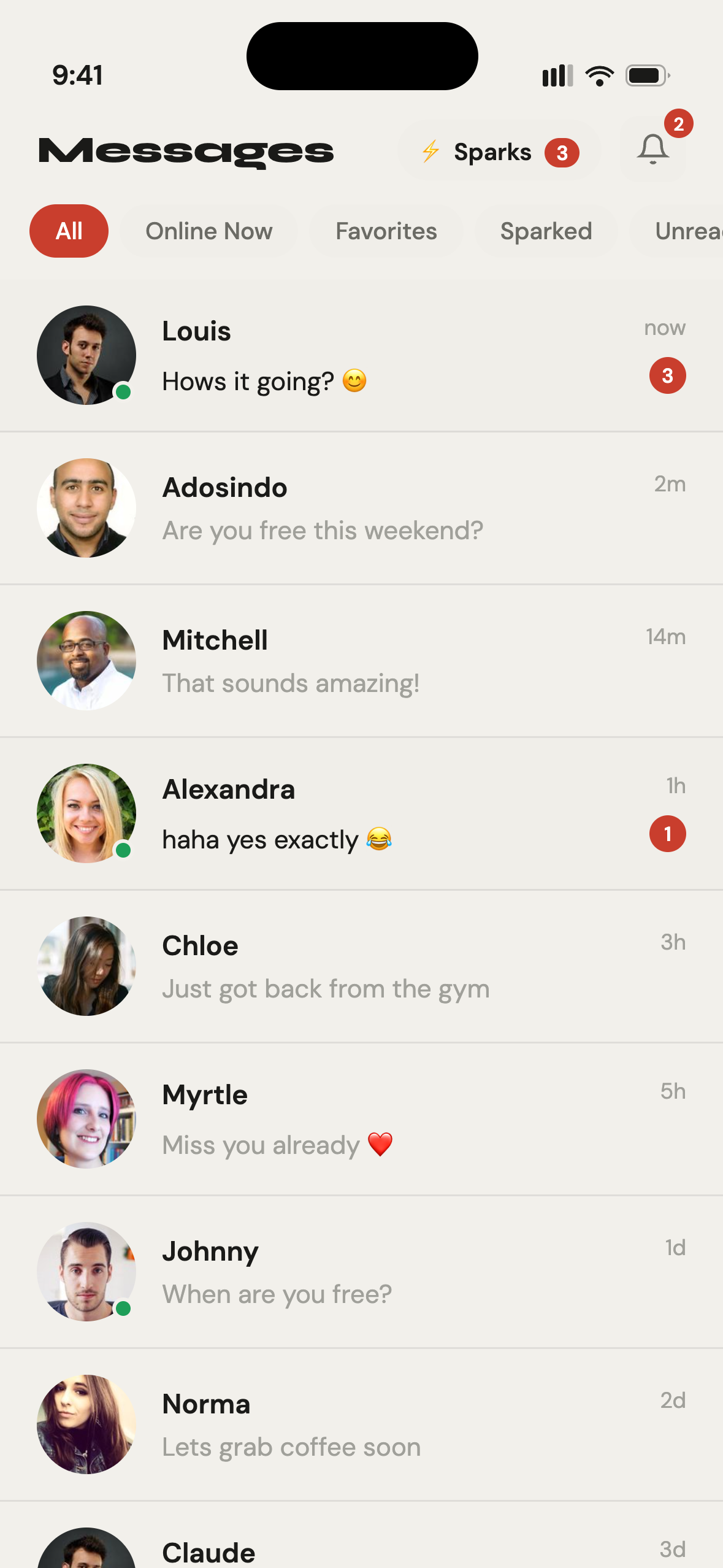
You matched. You sent a thoughtful first message. You waited. Nothing. Or worse: they replied, you had a promising back-and-forth for two days, and then — silence. No explanation, no goodbye, just a conversation thread that will never continue. If you’ve spent any time on a dating app, you know exactly why people ghost on dating apps, because you’ve been on the receiving end of it. What most people don’t know is that it’s not a coincidence, and it’s not simply human rudeness. It’s largely a product of how these platforms are built.
The Psychology Behind Ghosting
Before blaming the individuals involved, it helps to understand the psychological forces at play. Three separate mechanisms converge to make ghosting the default behavior on swipe-based apps.
The paradox of choice. When you have 50 active matches, the cost of losing any single one feels low. Barry Schwartz’s classic research on choice overload applies directly here: the more options you perceive yourself to have, the less committed you feel to any one of them. Ghosting isn’t a conscious decision to be cruel — it’s often the absence of a decision, combined with the belief that something slightly better might be one swipe away.
Absence of social accountability. In any other social context — a party, a workplace, a friend group — ghosting someone has consequences. They know your friends. They might see you at the coffee shop. The social friction of being known as someone who disappears is a real deterrent. On a major swipe app, your match is a stranger with no overlap to your real social world. The cost of ghosting them is approximately zero.
Asymmetry between matching and messaging. Swiping is frictionless and low-commitment. Matching feels like a micro-reward — a small dopamine hit. Actually writing a message requires effort, vulnerability, and the risk of rejection. When the act of matching is so much easier than the act of conversing, many users accumulate matches they never intend to pursue. Those unfollowed threads don’t feel like ghosting to the person who collected the match — but to the person waiting for a reply, that’s exactly what it is.
How App Design Makes Ghosting Worse
Here’s the uncomfortable truth that dating app companies don’t advertise: the design choices that maximize their revenue are often the same choices that maximize ghosting. The real cost of ghosting goes well beyond individual frustration — research documents measurable psychological harm that compounds over time.
Unlimited swipes incentivize quantity over quality. When a free or cheap subscription lets you swipe on hundreds of profiles per day, you stop treating each match as a meaningful interaction and start treating the whole thing as a browsing exercise. The natural result is a match queue full of people you feel only vague interest in — and vague interest doesn’t translate into consistent follow-through.
Match queues with no expiry create false permanence. If your matches stick around forever, there’s no urgency to act on them. You tell yourself you’ll message them later, and later becomes never. The match decays without either person ever explicitly deciding not to pursue it.
Worst of all, many apps are deliberately designed to keep you in a state of low-grade romantic anxiety. An inbox full of unresolved connections keeps you opening the app repeatedly. From a product engagement standpoint, the ideal user is one who almost finds connection — someone perpetually tantalized but never satisfied. That user buys more Boosts, opens the app more often, and stays subscribed longer than someone who quickly found a great match.
What Accountability-Based Design Actually Looks Like
The alternative isn’t manipulation in the other direction — artificial urgency, guilt mechanics, or punishing users for not replying. It’s building a platform where the social stakes feel real enough that users engage thoughtfully by default.
Response Rate Badges are one of the most direct accountability tools available. When a user’s profile displays their likelihood of replying — derived from their actual behavior, not self-reported — it does two things: it sets honest expectations for people messaging them, and it gives the profile owner a reputation-based incentive to be responsive. If your profile shows that you reply to only 30% of messages, that’s visible information that changes how potential matches perceive you.
Gettit includes Response Rate Badges on all profiles in the Base tier — no premium required. The logic is simple: the feature benefits the ecosystem as a whole. When everyone can see reply likelihood, the entire platform becomes more efficient.
Match expiry windows create natural pressure without being punitive. If a match expires in 72 hours without contact from either party, it’s not a penalty — it’s an acknowledgment that neither person was that interested, and a nudge for those who are genuinely interested to act while the window is open. The match can always re-appear through continued proximity or a re-like, but the expiry prevents the accumulation of dead matches that make the inbox feel like a graveyard.
Verified identity changes the social calculus in a more subtle but powerful way. When both parties know that the other person is real — that there’s a genuine human with a real name and a real face behind the profile — the interaction feels more like a real social encounter and less like a text-based video game. Ghosting a real, verified person feels different than ghosting a profile that may or may not be genuine. Identity verification raises the social stakes to something closer to what you’d feel meeting someone at a party.
Practical Advice for Users Right Now
While you can’t force any platform to redesign itself, you can make choices that reduce ghosting in your own experience.
Lead with a specific question. Generic openers like “hey” or “how’s your week going” are easy to ignore. A message that references something specific from their profile and asks a real question demands a real answer. It also signals that you actually read their profile, which is notable enough that it tends to generate replies.
Suggest a specific time and place early. Not in the first message — but by the third or fourth exchange, if the conversation is going well, name a real date. “Are you free for coffee Thursday evening?” is harder to ghost than a continuation of abstract small talk. It makes the connection feel real and imminent rather than theoretical.
Choose platforms that align with your goal. If you’re on an app that profits from keeping you anxious and single, you’re fighting against the incentive structure of the entire platform. Apps designed to facilitate genuine connection — ones with verified profiles, accountability features, and design choices that reward quality over quantity — will naturally attract users with similar intentions. The culture of a platform is downstream of its design.
Ghosting isn’t going away entirely — it’s a human behavior that predates apps. But it’s dramatically amplified by platforms that benefit from it. Choosing differently is one of the more powerful decisions you can make in your dating life. Gettit is built as an anti-ghosting dating app — every design decision from Response Rate Badges to match expiry is oriented around real accountability. Join the Gettit beta and experience a platform built around the opposite philosophy.
Ready to Meet Real People?
Join the Gettit beta and get 6 months of Plus free.
Sign Up Now — 6 Months Free