The Real Cost of Ghosting: Why Dating Apps Let It Happen
December 1, 2025 — By Gettit Team · 10 min read
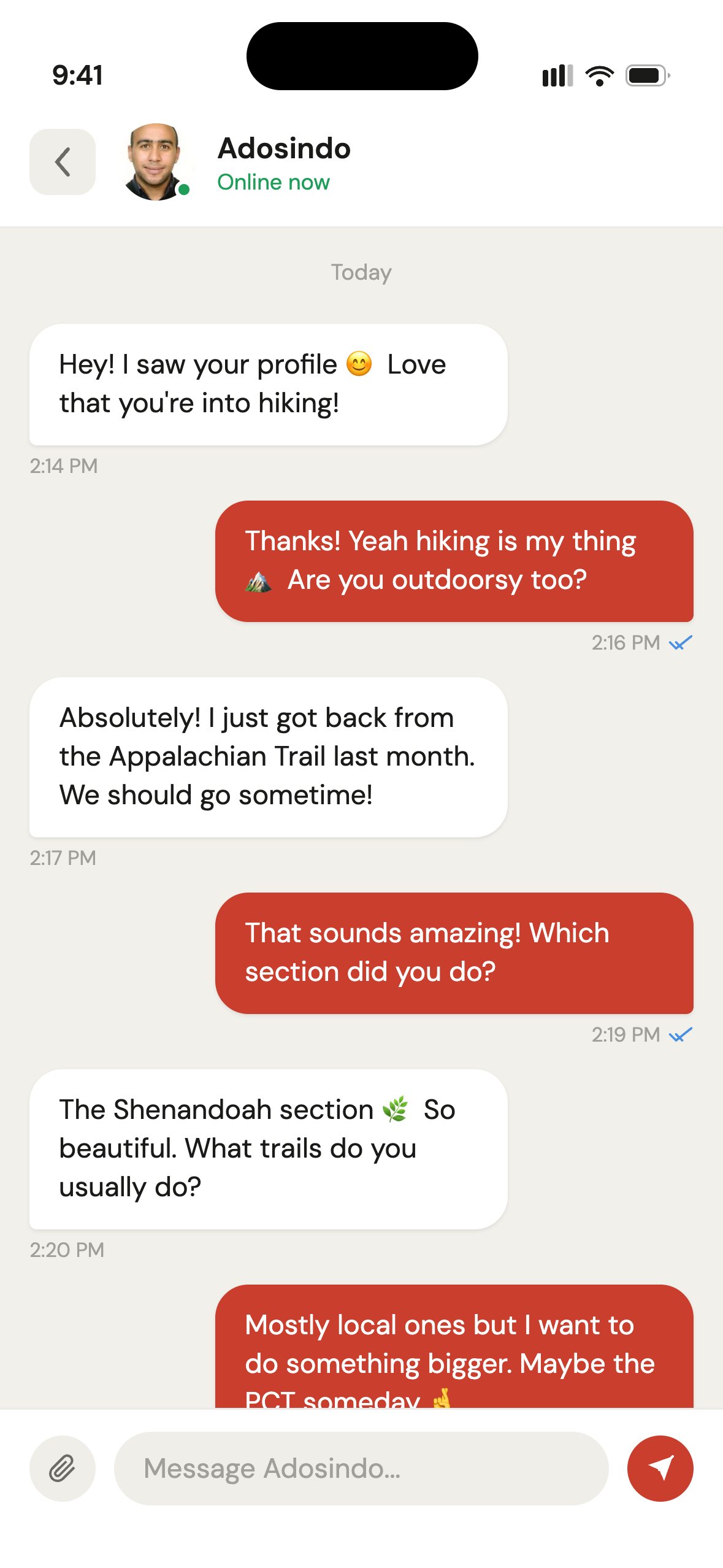
Ghosting on dating apps has become so normalized that many users treat it as an expected feature of the experience rather than a problem worth solving. That normalization has a cost — one that research increasingly quantifies, and one that the companies behind the most-used dating platforms have very little incentive to address. Understanding both the psychological toll and the business logic that sustains it is the clearest path toward making better choices about where and how you date online.
The Psychology: Why Ghosting Hurts More Than Rejection
Explicit rejection is painful. But researchers who study social pain have found something counterintuitive: ambiguous rejection — being ignored rather than refused — tends to be more distressing, not less.
The reason is rooted in how the brain processes unresolved social threats. When someone declines you clearly, your brain can register the loss, process it, and begin to move on. The outcome is known. When someone simply disappears, your brain is left in a state of unresolved threat detection — it keeps returning to the open loop, generating explanations, revisiting the interaction for signs it missed, and scanning for more information that never arrives.
Neuroimaging research has confirmed that social rejection activates the same neural pathways as physical pain — the anterior cingulate cortex, which processes distress and discomfort, responds to being excluded in measurably similar ways to how it responds to a physical injury. Ghosting prolongs this activation because the threat is never definitively resolved. You don’t know if you did something wrong, if they lost interest, if something happened to them, or if they were never genuinely interested at all. The ambiguity keeps the loop open.
Studies on ghosting specifically — as distinct from general rejection — have found higher rates of rumination, lower self-esteem outcomes, and stronger feelings of violation among people who were ghosted compared to those who received an explicit “I’m not interested.” The clear answer, even when negative, turns out to be kinder than silence.
How Common Is It?
Survey data on ghosting in dating app contexts consistently finds that the majority of users have experienced it — estimates from various studies range from 65 to 80 percent of active dating app users reporting having been ghosted at least once. More striking, similar percentages report having ghosted someone themselves. This isn’t a behavior confined to a minority of bad actors; it has become the statistical norm.
The frequency tracks closely with app design choices. On platforms with unlimited free swipes, no match expiry, and no accountability signals, ghosting rates are higher. The architecture of these apps removes friction from every stage of the process — including the stage where a person might otherwise feel compelled to send a brief “hey, I don’t think this is a match” message before leaving.
The Business Model Connection
The most important and least-discussed aspect of ghosting on dating apps is this: the companies behind the most-used platforms do not have a financial incentive to solve it.
Dating app revenue models are built around subscriptions, consumable boosts, and premium features. The user who stays subscribed for 18 months without finding a relationship is worth dramatically more to the platform than the user who finds a great match in the first three months and stops needing the app. From a revenue standpoint, the ideal outcome is not that you find love — it’s that you almost find love, repeatedly, just enough to stay hopeful and keep paying.
Ghosting is a perfect engine for this dynamic. Each unanswered message creates a new open loop. Each open loop brings you back to the app. Each return to the app is another engagement data point. The inbox full of conversations that petered out without resolution isn’t a failure state — it’s the product working as intended.
This explains why the major platforms have not meaningfully addressed ghosting despite years of user complaints and extensive media coverage. The solution is technically trivial. Response rate tracking, match expiry windows, and nudges to close conversations gracefully are not engineering challenges. They are business model challenges. Implementing them would reduce the anxious re-engagement that drives revenue.
What Accountability-Based Design Actually Solves
The alternative model starts from the premise that the platform should be aligned with users’ goals — actually meeting someone — rather than users’ perpetual engagement. Features that reduce ghosting naturally flow from this alignment.
Response Rate Badges make historical behavior visible. When a user’s profile displays that they reply to 85% of messages, that information helps their matches decide whether to invest time in a conversation. More importantly, it gives the profile owner a reputation-based reason to actually reply — ignoring messages has a visible cost to how you’re perceived. The badge creates accountability without punishment: it’s just honest information, surfaced in a way that benefits everyone.
On Gettit, Response Rate Badges are a Gettit Base-tier feature — not something locked behind a Plus subscription. The reasoning is that accountability features benefit the ecosystem as a whole, not just the individual user who pays for them. Making them universal means the entire platform operates at a higher social-accountability baseline.
Match expiry windows solve the dead-inbox problem structurally. A match that expires after 72 hours without contact from either party doesn’t generate the open-loop anxiety of an unanswered message — it simply closes, cleanly, without ambiguity. Both parties know the window closed without connection, which is emotionally cleaner than an unanswered thread that sits for months. The user who was genuinely interested has a clear reason to act during the window. The user who wasn’t can let it expire without having to formally reject anyone.
Verified identity changes the social dynamics of every interaction in a subtle but meaningful way. Part of what makes ghosting feel consequence-free on major apps is that the person you’re ignoring is effectively a stranger — they have no connection to your social world, no way to surface your behavior to anyone you know, and no lasting presence in your life. When both parties have verified, documented identities, that changes. The person on the other end of the conversation is unambiguously a real human. That social reality is enough to shift behavior for many users who aren’t deliberately trying to hurt anyone — they just needed the interaction to feel like it counted.
Choosing Apps Aligned With Your Goal
The most actionable conclusion from all of this is also the simplest: if your goal is actually meeting someone, choose a platform whose business model is aligned with that goal.
Apps that profit from your extended subscription without meaningful progress have the wrong incentives. Every feature they offer that seems designed to improve your experience — the curated matches, the profile prompts, the compatibility scores — exists to keep you engaged with the platform, not to efficiently connect you with a compatible person and send you on your way.
Apps with verified-user grids, accountability features, and match structures designed to create genuine momentum are aligned differently. Their success depends on matches that turn into real conversations, real dates, and real outcomes — because users who experience that are the ones who recommend the platform and return to it if they find themselves single again.
Ghosting isn’t going to disappear from human behavior entirely. But the rate at which it happens, and the degree to which it dominates your experience of online dating, is substantially determined by which platform you’re on. Gettit’s design as an anti-ghosting dating app — with Response Rate Badges, match expiry windows, and verified identities — changes that equation at the structural level. Join the Gettit beta and choose an app that’s built for the outcome you’re actually looking for.
Ready to Meet Real People?
Join the Gettit beta and get 6 months of Plus free.
Sign Up Now — 6 Months Free