Gettit vs. Grindr: A Safer, Bot-Free Alternative for Gay and Queer Men
January 5, 2026 — By Gettit Team · 10 min read
Grindr has dominated LGBTQ+ dating for the better part of 15 years. Its proximity-based grid, launched in 2009, was genuinely ahead of its time — the first mainstream app to show you who was nearby without requiring a mutual swipe. For gay and queer men in particular, it became infrastructure: the default answer to the question of who’s around. But a growing number of users are actively searching for a grindr alternative that’s safe — and the reasons why are well-documented, serious, and worth examining honestly before choosing where to put your trust and your data.
What Grindr Does Well
Before the comparison, credit where it’s due. Grindr’s proximity grid is fast, functional, and has a density advantage that no newer app has yet matched. In most major cities worldwide, it’s the app with the most active users at any given moment. For travelers, that ubiquity has real value — the same interface works in cities where alternatives have no user base at all.
The grid format itself is sound. Showing nearby users by distance, without requiring a mutual match before messaging, reduces friction for users who know what they want. These are genuine product strengths that explain why Grindr remains the default for so many users despite its significant and well-publicized problems.
Privacy: A Documented History
Grindr’s privacy record is one of the most concerning of any major consumer app, and the incidents are matters of public record rather than speculation.
In 2018, it was widely reported that Grindr had shared users’ HIV status data — information users had voluntarily disclosed on their profiles — with third-party analytics companies. For a platform serving LGBTQ+ users in regions where that information carries serious personal risk, this was a fundamental breach of trust. Grindr updated its data sharing practices following the reporting, but the disclosure had already occurred.
In 2022, a Catholic newsletter outlet reported that it had purchased commercially available location data and used it to identify a senior Catholic official who had been using Grindr. The incident illustrated how granular location data, even when nominally anonymized, can be de-anonymized and used to identify specific individuals. The implications for Grindr users in less tolerant environments were and remain serious.
Grindr has also faced scrutiny over the national security implications of its ownership. The company was owned by a Chinese technology firm from 2016 to 2020, during which period U.S. national security officials raised concerns about foreign access to sensitive personal data. The company was subsequently sold, but the episode raised lasting questions about data governance.
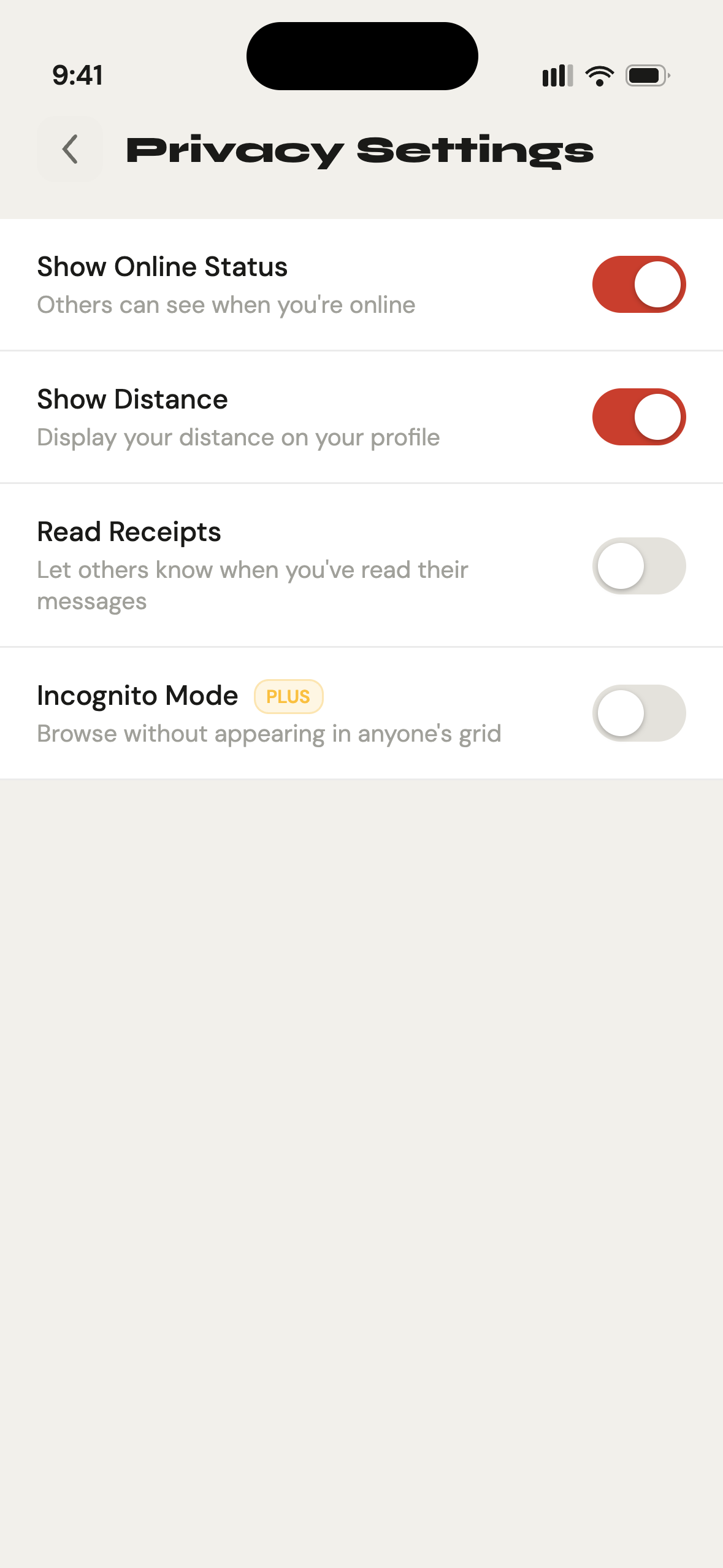
Gettit’s privacy architecture was designed with these specific risks in mind. Location is never shared as exact coordinates — the proximity grid uses fuzzing to show approximate distance without pinpointing a user’s location. Users can control exactly how their visibility is managed. No personal data is sold to third parties. The platform is built for GDPR and CCPA compliance by design, not as a retrofit.
Bots and Fake Profiles
Grindr is widely recognized as having one of the highest bot and fake profile rates of any major dating app. The combination of a free tier, minimal friction at account creation, and a large, active user base makes it an attractive target for scam operators. Common patterns include romance scams, crypto investment fraud (“pig butchering”), and accounts designed to harvest personal information or drive users off-platform to paid content.
The scale of the problem is significant enough that it has become a running joke in the community — one that reflects genuine frustration. Users have developed informal detection heuristics: be skeptical of profiles with too-perfect photos, be wary of anyone who pivots quickly to an off-platform conversation, and never send money to someone you’ve only spoken to online.
These are reasonable precautions, but they’re work that users shouldn’t have to do. They’re a symptom of a platform that hasn’t solved the root problem.
Gettit requires identity verification before any profile goes live. Every user in the Gettit grid passed a live selfie verification check. Bot accounts and scam profiles cannot pass that gate. The heuristics that Grindr users have to maintain as a survival skill simply aren’t necessary on a platform where every face belongs to a verified person.
Safety: Accountability and Real-World Risk
Grindr’s anonymity model — which allows users to interact without verified identities — has been associated with drug-facilitated crimes and robberies. Several high-profile cases have documented how anonymous hookup culture, combined with unverified identities, creates conditions that bad actors can exploit. These incidents have been reported in multiple countries and have resulted in legal proceedings, policy discussions, and calls for regulatory action.
The platform has taken steps including adding more reporting tools and safety resources, but the underlying condition — that no one’s identity is verified — remains unchanged.
Gettit’s identity verification requirement creates accountability that anonymity cannot. A verified user knows their real identity is associated with their account and their behavior on the platform. That doesn’t guarantee that everyone will behave well, but it changes the risk calculus for users considering who to meet, and it creates a real trail if something does go wrong.
Inclusivity: Gay-First vs. Everyone
Grindr was built for gay and bisexual men and has expanded to include more gender identities and orientations over time. The core product, grid layout, and community norms were established around that original audience. Users outside that primary demographic sometimes report that the experience feels like an afterthought.
Gettit was designed from the beginning for all LGBTQ+ identities and orientations, as well as straight users. There’s no primary audience that everyone else is adapted around — the platform was built to serve everyone without hierarchy. As a safe LGBTQ+ dating app, Gettit pairs inclusive design with structural safety features like mandatory verification and location fuzzing.
Pricing
Grindr’s free tier remains available and is the entry point for most users, though it’s limited in features and packed with the ads and bots that a free model produces. Grindr Unlimited, which removes ads and adds features including unlimited blocking and more visibility controls, runs roughly $29.99/month.
Gettit Base is $0.99/month with no free tier — the same structural choice that eliminates the economics of bot farming. Full messaging, verified grid, Response Rate Badge, and location fuzzing. Gettit Plus at $9.99/month adds Incognito Mode, Video Intro, Who Viewed Me, read receipts, typing indicators, voice messages, disappearing messages, AI icebreakers, message translation, and advanced search.
Grindr Unlimited costs roughly eight times more than Gettit Base and still doesn’t verify identity or meaningfully address the bot problem.
The Honest Assessment
Grindr’s dominance is real, and its network effects are significant. If your priority is maximum density of nearby users in the largest possible number of cities, Grindr currently wins that comparison. That’s a legitimate reason to be on it.
But the privacy track record, the bot rate, and the safety concerns are not minor footnotes. They’re documented, serious, and ongoing. For users who’ve decided that those trade-offs are no longer acceptable — or for users who are new to the space and choosing a first platform — Gettit offers a structurally different approach: verified identities, location fuzzing, no data selling, no free tier to exploit.
For a deeper dive into where Grindr and Gettit stand on every dimension — privacy, bots, safety, and pricing — see the full comparison of Grindr vs. Gettit. Gettit’s beta launches in New York City in April 2026. Sign Up Now — beta testers receive Gettit Plus free for six months.
Ready to Meet Real People?
Join the Gettit beta and get 6 months of Plus free.
Sign Up Now — 6 Months Free